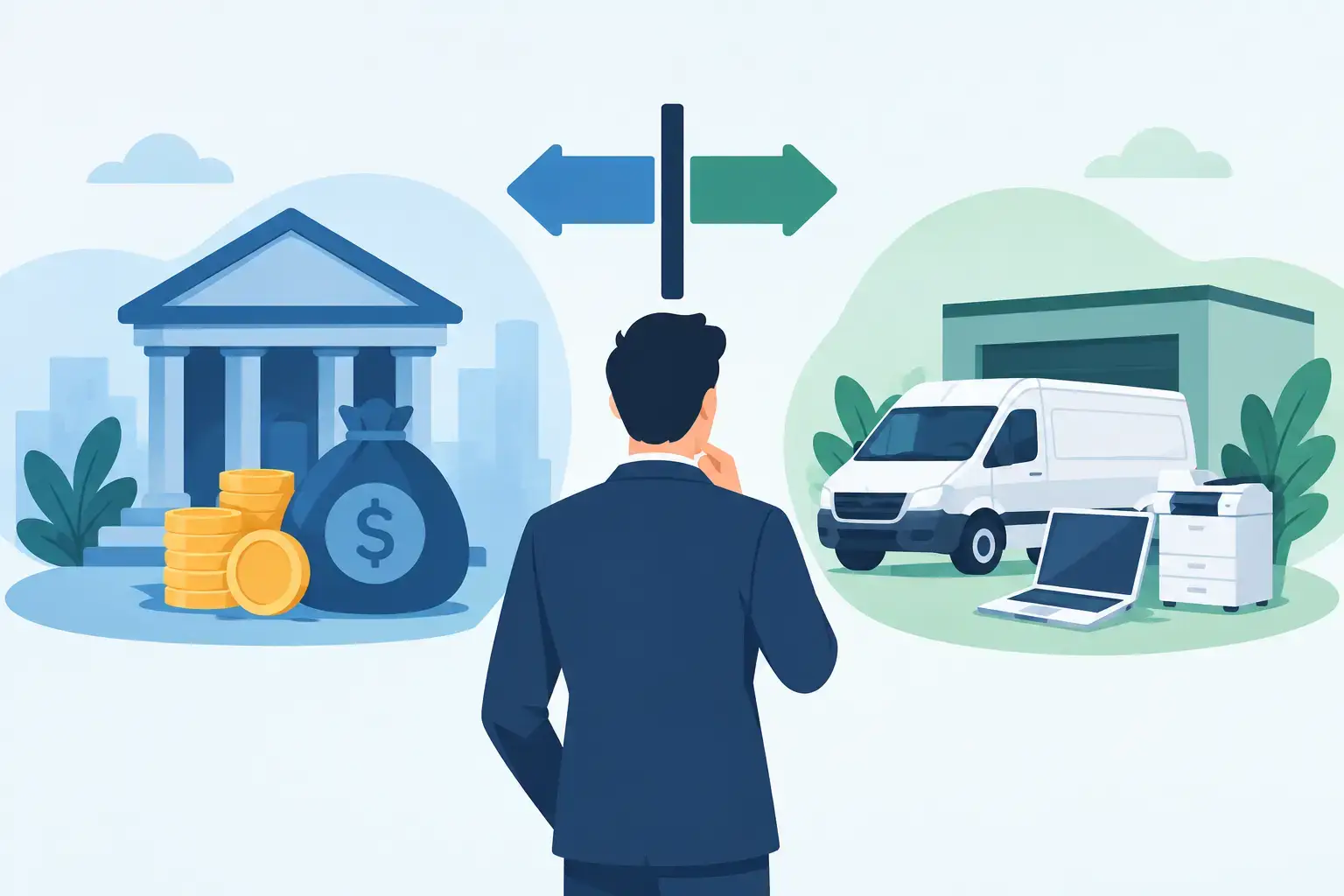
A new production machine, delivery vehicle or IT system can improve how your business operates, but the funding decision can shape cash flow for years. When weighing a term loan versus leasing arrangement, the right answer is rarely just about the lowest monthly figure. It depends on how long you expect to use the asset, how quickly it may become outdated, and how much flexibility your business needs.
For Singapore SMEs, both options can preserve working capital that might otherwise be tied up in a large upfront purchase. The difference is who owns the asset, how payments are structured and what happens at the end of the agreement. Understanding those details before you apply helps you compare finance options on like-for-like terms.
What a term loan means for an asset purchase
A term loan is a fixed amount borrowed from a lender and repaid over an agreed period, usually through regular monthly instalments. Your business uses the loan proceeds to buy the asset, so it generally becomes the owner from the start. Depending on the lender and facility, the asset, a director's guarantee or other security may support the borrowing.
This route suits businesses buying equipment with a long useful life. A commercial oven, specialised machinery or a vehicle fleet may generate value for several years, making ownership commercially sensible. Once the loan is fully repaid, the asset remains with your business and can continue to be used, sold or traded in.
The trade-off is responsibility. Your company carries the risk of maintenance, declining resale value and technological obsolescence. A term loan also often requires a deposit or an upfront contribution, although the amount varies by lender, asset type and your business profile.
The quoted interest rate matters, but it is not the whole cost. Review the effective cost of borrowing, processing fees, late-payment charges, early repayment terms and whether the facility has a fixed or variable rate. A lower rate can lose its advantage if the agreement includes restrictive prepayment conditions or fees that do not fit your plans.
How business leasing works
With leasing, a finance provider purchases the asset and your business pays to use it over a set period. The provider usually retains ownership during the lease. At the end of the term, the available choices depend on the agreement: return the asset, renew the lease, upgrade to newer equipment or, in some structures, buy the asset for an agreed amount.
Leasing is often attractive where equipment changes quickly or where regular upgrades have clear operational value. Technology hardware, medical devices, office equipment and certain vehicles are common examples. Rather than committing capital to an asset that may be less competitive in three years, a business can plan around a defined usage period.
Monthly lease payments may be easier to forecast than a large cash purchase. However, they should not automatically be treated as cheaper. The total amount paid across the full lease term, including deposits, documentation fees, insurance obligations, maintenance provisions and end-of-term charges, may be higher than buying with a term loan.
A lease also brings contractual limits that deserve attention. There may be mileage limits for vehicles, standards for returning equipment, restrictions on modifications or penalties for ending the agreement early. These conditions are reasonable protections for the owner, but they can reduce flexibility for a growing business.
Term loan versus leasing: the practical differences
The most useful comparison starts with the asset itself, not the product label. Ask whether you want to own it, how long you need it and what it will be worth when you no longer use it.
A term loan gives you ownership and more control over the asset. That can be valuable for equipment likely to retain usefulness beyond the repayment period. It may also make sense where the business wants the option to sell the asset later and recover some value. In return, you manage disposal, repairs and any fall in resale value.
Leasing prioritises use over ownership. It can conserve cash, create a predictable replacement cycle and reduce the risk of being stuck with outdated equipment. That benefit is strongest when the asset has a shorter commercial life or when current technology directly affects revenue, service quality or compliance.
Cash flow is another dividing line. A term loan can involve a meaningful upfront payment, while a lease may spread more of the cost over time. Yet lower monthly payments do not always mean better affordability. A longer term can reduce the monthly commitment while increasing the total paid. The right structure leaves enough headroom for wages, stock, rent and unexpected costs, not just the first few months of repayments.
Compare the full financial commitment
Before making a decision, request a clear illustration of the entire commitment under each option. Compare the same asset, the same expected usage period and, where possible, similar repayment timing. This avoids comparing a three-year lease against a five-year loan purely on the headline monthly payment.
Consider these questions during your assessment:
- What deposit or advance payment is required, and when is it due?
- What is the total of all scheduled payments, interest or finance charges, and fees?
- Is maintenance included, required separately or entirely your responsibility?
- Can you settle early, and what would that cost?
- What happens at the end of the agreement, including purchase, return or renewal charges?
- Does the provider require security, insurance or a personal guarantee?
For tax and accounting treatment, avoid assumptions. The treatment of loan interest, lease payments, capital allowances and GST can differ based on the agreement and your business circumstances. Your accountant or tax adviser can confirm the position before you sign, especially for a significant asset purchase.
When a term loan is likely to fit better
A term loan is often the stronger choice when the asset has a long useful life and ownership delivers a practical advantage. A construction firm buying machinery it expects to operate for many years, for example, may prefer to build equity in that equipment rather than make ongoing lease payments.
It can also suit companies that want full control over asset use. If you need to customise machinery, keep a vehicle beyond a standard lease period or sell the asset when business needs change, ownership can be worth the extra responsibility. Businesses with stable cash flow may also prefer the certainty of a fixed repayment schedule and a clear end date.
That said, do not stretch the loan term simply to produce an attractive monthly figure. Ideally, the repayment period should reflect the asset's useful economic life. Paying for obsolete equipment after it has stopped supporting operations creates avoidable pressure on cash flow.
When leasing may be the better commercial move
Leasing can be a practical choice when your priority is preserving capital for inventory, recruitment, marketing or expansion. It lets a business access essential equipment without absorbing the full purchase price at once, which can be particularly useful during a growth phase.
It is also well suited to assets that are likely to need replacing before their physical life ends. A design studio that depends on current computers, or a logistics business managing a regularly refreshed vehicle fleet, may value an upgrade path more than eventual ownership.
Be realistic about usage. If the asset will see exceptionally heavy use, incur wear and tear or need major changes, a lease may become less attractive once return conditions and excess charges are considered. In those cases, ownership through a term loan may provide better long-term freedom.
Make the decision around your operating plan
The strongest funding choice supports the way your business earns, spends and grows. Start with the asset's expected life, then map the proposed payments against a conservative cash-flow forecast. Include quieter trading periods, not only your best months. If repayments remain comfortable under that scenario, you are comparing from a position of control rather than urgency.
It is equally useful to compare multiple lender offers before committing. Terms can vary widely in approval speed, deposit requirements, security, rates and flexibility. Smart-Lend helps businesses compare suitable financing options in one place, making it easier to focus on the terms that matter to your operating plan.
Choose a term loan when ownership, long-term use and control create more value. Choose leasing when access, cash preservation and planned replacement matter more. The best option is the one that keeps the asset productive without placing unnecessary strain on the business behind it.