A quarter-point change in interest rates can look small on paper. On a business loan, it can quietly affect monthly repayments, margins, and how much breathing room you have when cash flow tightens. That is why the fixed rate loan vs floating rate loan decision deserves more than a quick glance at the headline rate.
For business owners, the real question is not which option is universally better. It is which one fits your borrowing purpose, repayment horizon, and tolerance for changing costs. A lower starting rate may help today, but repayment certainty may matter more if your business is already managing tight operating cycles or seasonal revenue swings.
Fixed rate loan vs floating rate loan: what is the difference?
A fixed rate loan keeps the interest rate unchanged for the agreed period. Your repayments stay predictable, which makes budgeting easier and protects you if market rates rise. If your priority is cost certainty, this structure often feels more manageable.
A floating rate loan, sometimes called a variable rate loan, moves in line with a reference rate or the lender's prevailing rate. Your repayments can go down if rates fall, but they can also increase during the loan term. That gives you potential savings, but with less certainty.
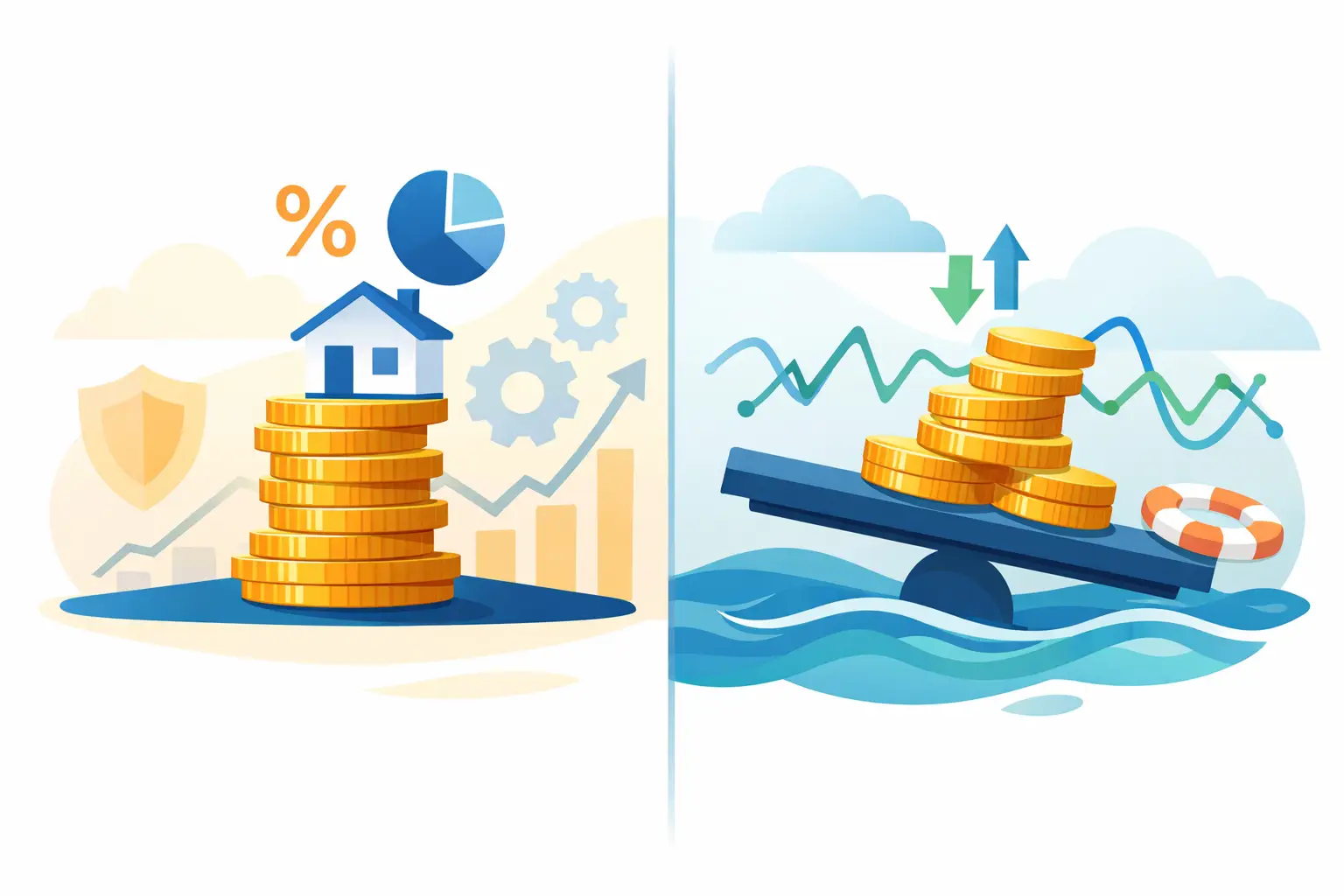
The key difference is simple. Fixed rates prioritise predictability. Floating rates prioritise flexibility and the chance of lower borrowing costs when rate conditions are favourable.
When a fixed rate loan makes more sense
A fixed rate loan is often the stronger option when repayment stability matters more than chasing the lowest possible rate. If you are funding equipment, renovation works, business expansion, or any investment with a clear payback timeline, stable monthly repayments can make planning far easier.
This matters even more for SMEs that operate with tight margins. If labour, rent, inventory, and supplier costs are already moving, holding one major financing cost steady reduces uncertainty. Finance teams and founders can forecast more accurately, especially when cash reserves are being preserved for growth.
Fixed rates can also be useful when interest rates are expected to rise or remain elevated. Locking in a rate may protect the business from future increases. In that situation, the value is not just in the rate itself but in avoiding unpleasant surprises later.
That said, fixed does not always mean cheaper over the full term. Lenders may price in the value of certainty, so the starting rate can be higher than a floating option. Some fixed-rate facilities also come with less flexibility around early repayment or refinancing. If you settle the loan ahead of schedule, break costs or penalties may apply.
When a floating rate loan may work better
A floating rate loan can suit businesses that want more flexibility or expect rates to ease over time. If the loan is short term, the lower starting rate may make a meaningful difference to cash flow, especially for working capital, bridging needs, or inventory purchases tied to near-term revenue.
This structure can also fit businesses with stronger cash positions. If your company can absorb repayment changes without operational strain, taking a floating rate may be a reasonable way to keep borrowing costs lower at the outset.
Some borrowers also choose floating rates because they want the option to refinance or repay early with fewer restrictions. This can be useful if you expect incoming capital, a major receivable, or a planned restructuring of your debt stack.
The trade-off is exposure. If rates move against you, the monthly repayment rises. That can weaken cash flow at the wrong time, particularly if revenue is uneven or your customers pay on long terms. A floating rate looks attractive when rates are stable or falling, but it demands more room for movement in your financial planning.
Cost is not just about the advertised rate
One common mistake is comparing fixed and floating loans on the headline interest rate alone. The lower rate does not automatically mean the lower total cost.
You also need to look at fees, repricing mechanics, repayment structure, and how the lender calculates interest. Some loans have flat fees that materially change the effective cost. Others have stepped rates, review periods, or terms that make refinancing less straightforward than expected.
For business borrowers, the right comparison is total borrowing cost against operational impact. A loan that is marginally more expensive but easier to budget may be better for a business that values predictability. A loan with a lower starting cost may be better if the company is borrowing for a short duration and has enough cash flow buffer to manage rate movement.
That is why transparent comparison matters. Looking at rates, tenure, fees, and monthly repayment scenarios side by side gives a much clearer picture than rate shopping in isolation.
How to choose between fixed and floating rates
The best choice usually comes down to five practical questions.
First, why are you borrowing? Long-term growth investments often align well with fixed rates because they support stable planning. Shorter-term borrowing needs may suit floating rates if the business can handle some variability.
Second, how predictable is your cash flow? If your revenue is steady and well contracted, you may be comfortable taking some rate risk. If cash flow is seasonal or exposed to payment delays, a fixed repayment structure can reduce pressure.
Third, what is your outlook on interest rates? No borrower can predict rates perfectly, but your decision should reflect the environment. If rates seem likely to rise, fixing may offer protection. If they are expected to soften, floating may give you a better overall cost.
Fourth, how important is flexibility? If you may repay early, refinance, or adjust your debt structure within a year or two, review the fine print carefully. A fixed-rate product may limit that flexibility.
Fifth, how much risk can the business comfortably absorb? This is often the deciding factor. A floating rate may be mathematically attractive, but if a rate increase would affect payroll, supplier payments, or stock purchasing, the saving may not be worth the exposure.
Fixed rate loan vs floating rate loan for Singapore SMEs
For businesses in Singapore, this choice often sits within a broader financing decision rather than a stand-alone rate decision. Many SMEs are balancing working capital needs, rising operating costs, and the need to move quickly when opportunities appear. In that context, the best loan is usually the one that matches both the business purpose and the company’s ability to absorb repayment changes.
A borrower funding immediate operational needs may prioritise speed, lower initial repayments, and flexibility. A borrower financing expansion may care more about repayment certainty and cleaner long-term forecasting. Neither approach is wrong. The loan structure simply needs to fit the commercial reality of the business.
This is where comparing multiple lenders can save time and reduce guesswork. Different lenders weigh rate type, tenure, collateral, and risk very differently. Seeing those options in one place makes it easier to judge whether a fixed premium is justified or whether a floating structure offers genuine value.
The trade-off most borrowers actually face
In practice, the fixed rate loan vs floating rate loan decision is rarely about optimism versus caution. It is about choosing which type of risk you would rather manage.
With a fixed rate, you may accept a slightly higher initial cost in exchange for certainty. With a floating rate, you accept uncertainty in exchange for possible savings and flexibility. The right answer depends on which trade-off supports better decision-making inside your business.
If you are already managing multiple moving costs, certainty has real value. If your business is financially resilient and the loan is tactical or short term, flexibility may be worth more.
A useful test is this: if rates rose faster than expected, would your business still feel comfortable with the repayments six months from now? If the answer is no, a fixed rate deserves serious consideration. If the answer is yes, and the loan terms are otherwise competitive, a floating rate may be a practical fit.
The strongest borrowing decisions are rarely based on rate alone. They come from matching the loan to how your business actually operates, so repayment supports growth rather than distracting from it.