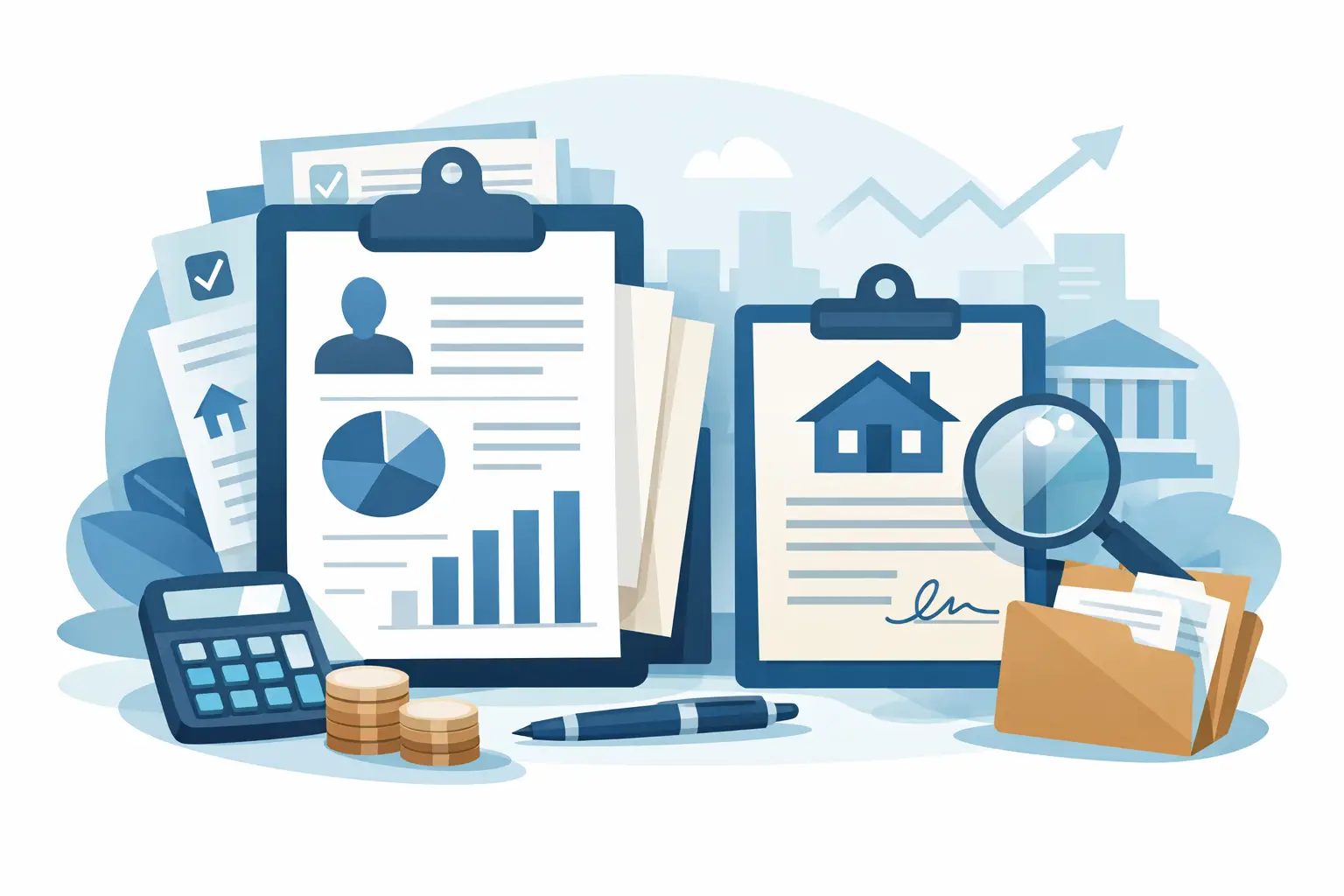
When a lender asks for documents, they are not trying to slow you down. They are trying to answer one commercial question quickly: can this business repay the loan on time? If you are asking what documents do lenders need, the shortest answer is this - proof of who you are, how your business is performing, and whether the numbers support the amount you want to borrow.
That sounds simple, but the exact paperwork can vary depending on the lender, the loan type, and how established your business is. A newer company applying for working capital will usually face different checks from a mature business seeking a larger expansion facility. The good news is that most lenders are looking for the same core evidence.
What documents do lenders need for a business loan?
Most lenders start with three areas: business identity, financial performance, and repayment capacity. They want to confirm that your company is properly registered, that it is actively trading, and that cash flow is strong enough to support monthly repayments.
In practical terms, that usually means your application will include company registration details, identification documents for directors or owners, recent bank statements, and financial statements. Some lenders will also ask for management accounts, proof of revenue, details of existing debt, and a short explanation of what the funding is for.
The reason these requests keep appearing across different lenders is straightforward. Lenders are assessing risk, but they are also looking for consistency. If your turnover, bank activity, and financial statements tell the same story, approval tends to move faster. If the numbers do not line up, expect more questions.
The core documents most lenders ask for
The first category is business verification. This usually includes your company registration records and basic business profile information. In Singapore, that often means ACRA business documents, though different lenders may ask for slightly different formats or recent extracts. The goal is to confirm legal existence, ownership structure, and trading status.
The second category is personal identification for directors and shareholders. A lender will commonly request NRIC or passport copies, and sometimes proof of residential address. If there are multiple owners or guarantors, each relevant party may need to provide documents. This can catch applicants out, particularly when one shareholder is travelling or slow to respond.
The third category is bank statements. These are often the most important documents in the file because they show current trading activity and cash movement in real time. Many lenders ask for the latest six months, though some may want less for smaller facilities or more for larger loans. Bank statements help them assess revenue consistency, expense levels, existing loan obligations, and how much headroom the business has.
The fourth category is financial statements. Depending on the lender and the stage of your business, this may include full financial accounts, profit and loss statements, balance sheets, and tax filings. Established businesses are more likely to be asked for two years of accounts. Smaller or younger firms may rely more heavily on recent bank data and internal management accounts if formal accounts are limited.
The fifth category is loan purpose. Some business owners assume this part is optional, but lenders usually want a clear explanation of how funds will be used. Working capital, payroll support, equipment purchase, stock financing, and expansion are all common purposes. A precise answer tends to work better than a vague one. "To support cash flow during a seasonal inventory build" is stronger than simply "for business use".
Why lenders ask for so much paperwork
From a borrower’s side, document requests can feel repetitive. From a lender’s side, they reduce uncertainty. A lender is not only checking whether your business is profitable. They are checking whether it is stable, whether directors are credible, and whether there are signs of pressure that could affect repayment.
For example, a business might show healthy annual revenue, but bank statements may reveal irregular cash flow or frequent overdraft stress. Another company might have strong recent sales, yet a balance sheet could show significant existing debt. Neither situation automatically leads to rejection, but both affect the decision, pricing, or loan amount.
This is also why different lenders ask for different combinations of documents. Some rely more heavily on digital bank analysis. Others place more weight on historical financial accounts. If you are comparing multiple loan options, it helps to expect some variation rather than assuming every lender uses the same checklist.
What documents do lenders need from newer businesses?
Newer businesses often worry that a short trading history means they should not apply. That is not always true, but document expectations do change. If your business has limited filed accounts, lenders may focus more on recent invoices, sales records, contracts, bank statements, or management accounts.
In some cases, the strength of the directors matters more heavily too. A lender may review the owners’ background, prior business experience, or personal credit standing if the company itself has a short financial record. Personal guarantees are also more common with younger businesses, which means the paperwork may extend beyond the company into the finances of individual directors.
This is where preparation matters. A newer business does not need perfect history, but it does need a clear case. If turnover is growing, customer payments are consistent, and the funding purpose is commercially sensible, that can still support a strong application.
Common mistakes that slow approval
Most delays are not caused by credit quality alone. They happen because documents are incomplete, outdated, or inconsistent. A bank statement with missing pages, financials that do not match the figures in the application, or identification documents that have expired can all push a case back into review.
Another common problem is sending too much without structure. More documents do not always help if the key ones are buried. Lenders and credit teams work faster when files are clearly labelled and current. If you are providing several months of records, make sure they are easy to identify and in the correct order.
It also helps to be realistic about the funding request. If the loan amount is significantly higher than what your financial profile supports, the lender may ask for additional evidence. That can include debtor ageing reports, contract pipelines, or more detailed cash-flow forecasts. The larger or riskier the request looks, the more proof you may need to provide.
How to prepare your documents before applying
The fastest applications are usually the best-prepared ones. Before approaching lenders, gather your registration records, director IDs, recent bank statements, latest financial statements, and tax documents if available. Check that names, business details, and reporting periods are consistent across the file.
Then review your numbers the way a lender would. If revenue dipped for two months, be ready to explain why. If there is a large one-off expense or an unusual transfer in your bank statements, a short note can prevent unnecessary back-and-forth. You do not need to over-explain everything, but context helps when the numbers could be misread.
It is also worth deciding in advance how you will describe the loan purpose. Keep it commercial, specific, and proportionate. Lenders respond better when the use of funds is linked to a practical outcome such as bridging receivables, buying stock ahead of demand, or supporting a defined expansion plan.
What if one lender asks for more than another?
That does not automatically mean the stricter lender is worse or the easier lender is better. It often reflects a different credit model. Some lenders collect more paperwork upfront so they can issue a firmer decision later. Others ask for a lighter initial set of documents, then request more only if your application progresses.
The trade-off is speed versus depth. A lighter process can feel faster, but it may lead to more follow-up later. A fuller process can take more effort at the start, but sometimes produces clearer terms sooner. For business owners comparing funding options, that is an important distinction.
Using a comparison-led approach can help reduce repeated admin because you can prepare one strong document set and use it across multiple applications where relevant. That matters when time is tight and you do not want to repeat the same process lender by lender.
The real goal is confidence, not paperwork
When business owners ask what documents do lenders need, they are usually really asking something else: what will it take to get approved without wasting time? The answer is not just having documents. It is having the right documents, presented clearly, with a funding request that matches your business profile.
Strong applications are rarely about perfect paperwork alone. They are about giving lenders enough confidence to say yes, and enough clarity to do it quickly. If you prepare your documents before you apply, you put yourself in a better position to compare options, respond faster, and move towards funding with fewer surprises.
A little preparation at the start often saves far more time than chasing missing documents when the right loan opportunity is already on the table.