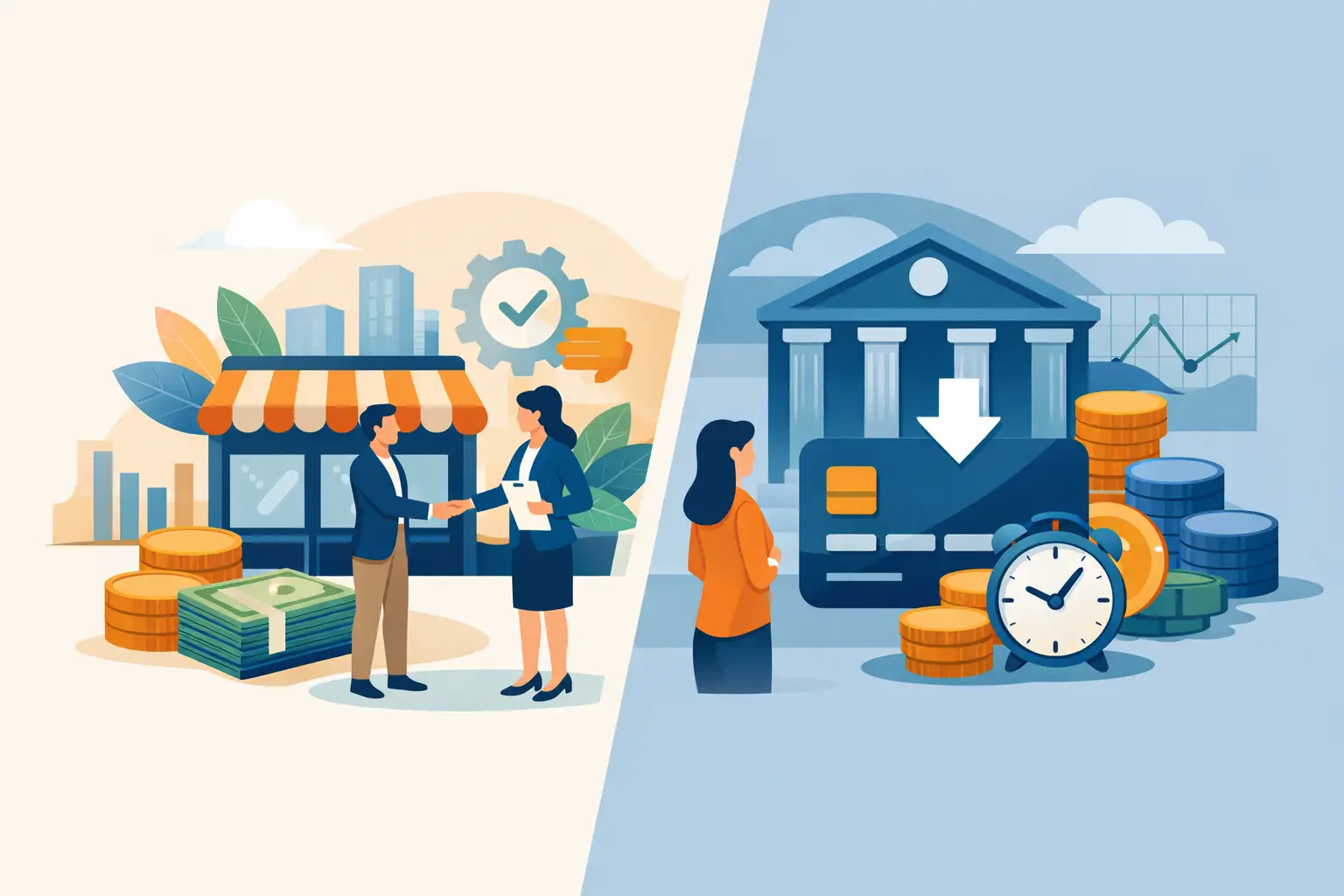
Cash flow rarely waits for perfect timing. A supplier wants payment before your customer settles an invoice, payroll lands during a slow month, or a growth opportunity appears before cash reserves are ready. In that moment, the SME loan versus overdraft question becomes practical rather than theoretical. Both can fund a business need, but they solve different problems and the wrong choice can leave you paying more than necessary or working with less flexibility than you need.
For most business owners, the real issue is not which facility sounds more familiar. It is which one matches the timing, amount, and predictability of the expense. If you treat a short-term cash gap with a long-term product, or finance a planned investment with a facility designed for day-to-day fluctuations, the funding itself can create pressure.
SME loan versus overdraft: the core difference
An SME loan is usually a fixed amount borrowed upfront and repaid over an agreed term. You receive a lump sum, the repayment schedule is set from the start, and the cost is generally easier to forecast. This structure suits planned spending, especially when you know how much funding is required and how long you need to repay it.
An overdraft works differently. It is a revolving credit line attached to your business account, allowing you to draw funds up to an approved limit when your balance falls short. You use only what you need, repay as cash comes in, and draw again if required, subject to the facility terms. That makes it more flexible, but usually less predictable in cost if it is used heavily or for long periods.
The distinction matters because one product is designed for certainty and the other for liquidity management. Neither is automatically better. The better option depends on how your business actually operates.
When an SME loan makes more sense
If you are funding something with a defined cost, a loan is often the cleaner option. That could be equipment, a fit-out, expansion into a new location, hiring for growth, inventory for a seasonal peak, or refinancing more expensive debt. In these cases, you can estimate the amount required and build repayment into your monthly planning.
The main advantage is clarity. You know the principal, the repayment period, and in many cases the expected monthly instalment. For a business owner making commercial decisions quickly, that predictability matters. It helps with budgeting and reduces the risk of relying on rolling short-term credit that never quite gets cleared.
Loans can also be more suitable for larger sums. If the business needs substantial capital, an overdraft limit may not be sufficient or may become expensive if used close to the maximum for extended periods. A term loan spreads the cost over time in a more structured way.
That said, a loan is less flexible once drawn. You may borrow a fixed amount and pay interest or fees on capital you do not fully need immediately. There can also be early repayment conditions, depending on the lender and facility. So while a loan is often efficient for planned funding, it is not always ideal for uncertain or stop-start cash needs.
When an overdraft is the better tool
An overdraft is often better suited to working capital fluctuations. If your business experiences uneven inflows and outflows, it can provide breathing room without requiring a full loan application every time cash tightens. This is especially relevant where customer payment cycles are slower than supplier terms, or where revenue is seasonal.
Used properly, an overdraft can be efficient because you draw only what is required. If you need support for a few days or weeks rather than several months or years, paying for access to revolving credit may be more sensible than taking a term loan and repaying it over a longer period than necessary.
It also gives flexibility for unpredictable shortfalls. If the amount you need varies month to month, an overdraft can adapt in a way a fixed loan cannot. For businesses with reliable incoming cash but occasional timing gaps, this can be a practical buffer.
The risk is that convenience can hide cost. Overdrafts are easy to lean on, and what starts as a short-term facility can become a permanent dependency. If your account sits overdrawn most of the time, you are no longer using it as a buffer. You are effectively financing an ongoing need with a product designed for temporary support.
Cost is not just about the rate
Many businesses compare an SME loan versus overdraft by looking only at headline interest. That is useful, but incomplete. The true cost depends on how the facility will be used.
With a loan, the total repayment profile is generally easier to calculate. You can assess monthly affordability and the full cost over the term. There may be processing fees or other charges, but the structure is visible from the start.
With an overdraft, cost can be more variable. You may be charged interest only on the amount used, which is attractive for short periods. But there may also be annual fees, renewal fees, or higher effective costs if the facility is regularly utilised. If the account remains in overdraft for long stretches, the flexibility premium can become expensive.
This is why usage pattern matters more than product label. A facility that looks cheaper on paper can cost more if it is used in the wrong way.
Repayment pressure and operational impact
Repayment structure affects more than finance. It affects decision-making, confidence, and room to operate.
A loan creates discipline because repayments are fixed. For many SMEs, that is a strength. It forces the business to plan and reduces ambiguity. If revenue is reasonably stable, fixed repayments can be absorbed into normal operating rhythms.
An overdraft feels lighter because there may be no traditional instalment schedule in the same way. But that can cut both ways. Without a clear repayment plan, businesses sometimes postpone the reset point, assuming future receipts will naturally restore the balance. If those receipts are delayed or margins tighten, the facility can stay drawn longer than expected.
The practical question is whether your business needs structure or flexibility. If a fixed schedule would strain cash flow during volatile months, an overdraft may provide useful breathing space. If too much flexibility encourages ongoing borrowing without a clear exit, a loan may be the healthier discipline.
Approval, security and lender appetite
Access can vary depending on the lender, your business profile, and the type of facility. Some lenders may be more comfortable offering a term loan for a defined business purpose with a clear repayment path. Others may support overdrafts where the business has stable account turnover and a credible need for short-term liquidity.
Security requirements also differ. Some facilities may be unsecured, while others may require personal guarantees or other support. The exact terms depend on credit profile, trading history, revenue, and facility size.
For borrowers comparing options in Singapore, this is where a broader view of the market helps. One lender's appetite does not represent the full market. Comparing multiple loan options side by side can save time and reveal a structure that better fits the business rather than forcing the business to fit a single lender's product.
How to decide between an SME loan and an overdraft
Start with the purpose of the funding. If the expense is planned, sized, and likely to deliver value over time, a loan is often the better match. If the need is short-term, irregular, and tied to cash timing rather than long-term investment, an overdraft may be more suitable.
Then look at duration. Ask whether the business needs funds for weeks, months, or years. Overdrafts are usually strongest over short periods. Loans are generally better for longer commitments.
Next, consider certainty. If you know the exact amount required, a loan brings order. If the amount may vary and you want access rather than a full drawdown, an overdraft may be more efficient.
Finally, examine behaviour. Be honest about how your business uses credit. If flexible facilities tend to become permanent, choose a structure with a clearer repayment path. If cash flow is healthy but uneven, flexibility may carry genuine value.
The better choice is the one that fits the job
There is no universal winner in the SME loan versus overdraft decision. A loan is usually stronger for planned investment and predictable repayment. An overdraft is often more useful for short-term cash flow support and operational flexibility. The mistake is treating them as interchangeable when they are built for different jobs.
A good funding decision should reduce pressure, not move it elsewhere. If you compare facilities with a clear view of purpose, cost, timing and repayment, you are far more likely to choose financing that supports the business properly. When the structure fits, funding becomes a tool for control rather than a source of friction.