A funding decision can shape your next 12 months more than most operational changes. If you borrow on the wrong structure, the monthly repayment, approval timeline or security requirement can create pressure long after the cash has landed. That is why understanding secured vs unsecured financing matters before you start comparing lenders.
For business owners, this is not just a technical distinction. It affects how much you can borrow, how quickly funds may be approved, what assets are at risk and how lenders price that risk. The right choice depends on what you need the money for, how urgently you need it and what your business can comfortably support.
What secured vs unsecured financing actually means
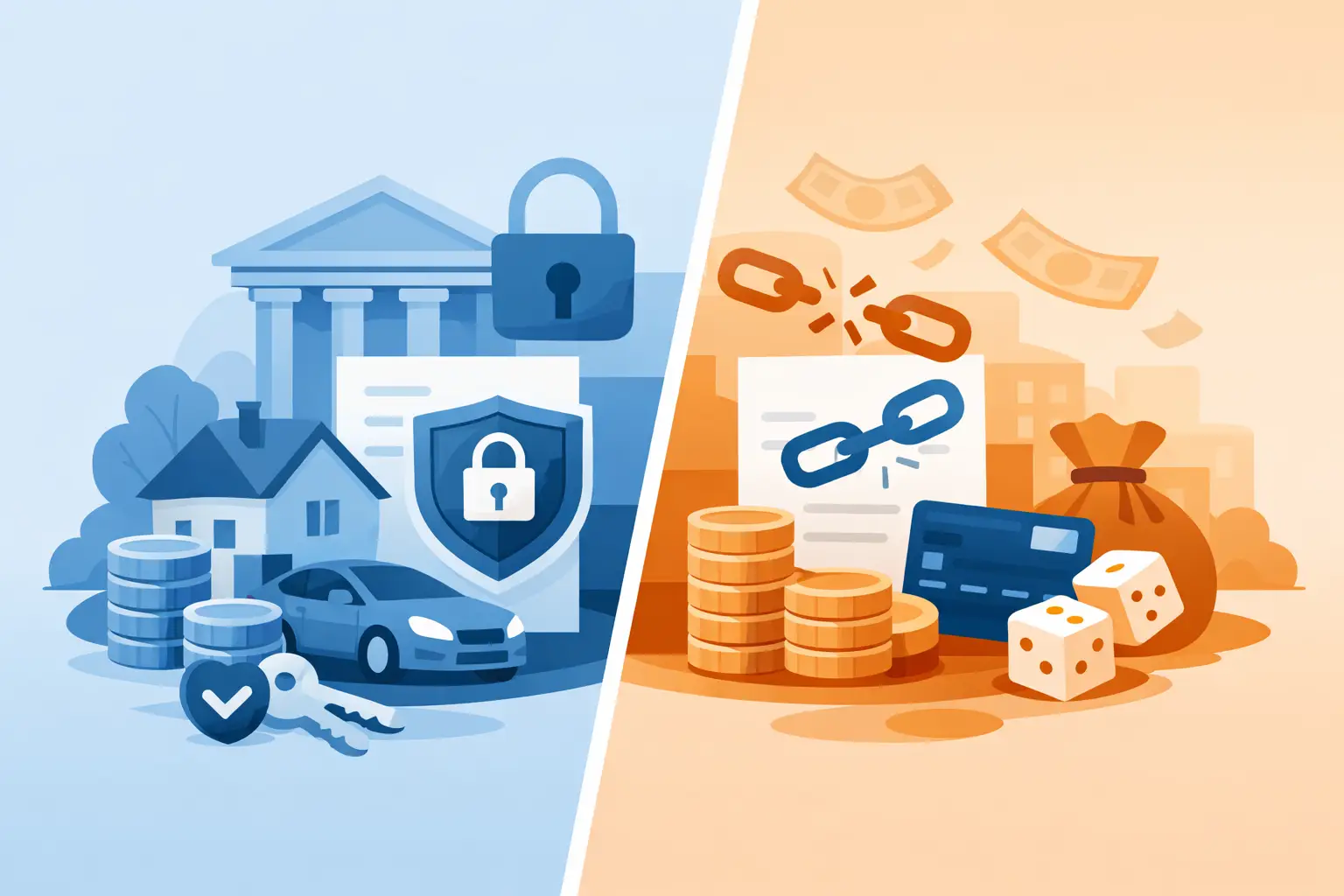
The difference is straightforward. Secured financing is backed by an asset or some form of collateral. Unsecured financing is not.
With secured borrowing, the lender has a claim over a specific asset if the business cannot meet repayment obligations. Depending on the facility, that could be property, equipment, inventory, receivables or another acceptable asset. Because the lender has added protection, secured facilities can sometimes offer larger loan amounts, longer tenures or lower pricing.
With unsecured financing, approval is based more heavily on your company’s financial strength, trading history, cash flow and credit profile. There is no pledged asset in the same way, although lenders may still require personal guarantees or other supporting commitments. Since the lender is taking more risk, unsecured facilities often come with higher interest rates or tighter borrowing limits.
Why the choice matters for SMEs
Many SMEs start by looking at the headline number - how much can I borrow and how fast can I get it. Those are sensible questions, but they are only part of the picture.
A secured facility may look cheaper on paper, yet it can involve valuations, legal documentation and a longer approval process. That may not suit a business trying to cover a short-term cash-flow gap or move quickly on a commercial opportunity.
An unsecured loan may be faster and simpler to arrange, which is valuable when timing matters. But the convenience can come with higher monthly costs. If margins are already tight, speed alone should not drive the decision.
The best financing structure is usually the one that fits both the purpose of the funding and the business’s ability to repay without strain.
When secured financing makes sense
Secured financing is often better suited to businesses that need a larger amount of capital or want a structure aligned with a long-term investment.
If you are buying equipment, expanding premises or funding a substantial growth plan, offering collateral may help you access more competitive terms. Lenders are generally more comfortable extending bigger sums when there is a recoverable asset supporting the facility.
This option can also suit established businesses with valuable assets but a preference for lower financing costs. In some cases, a company with strong collateral may secure terms that would be harder to obtain through an unsecured route.
That said, secured borrowing is not automatically the better deal. If the asset is essential to operations, the risk of enforcement matters. A lower rate is attractive, but it should never distract from what is being put on the line.
Common trade-offs with secured facilities
The main advantage is lender confidence. That can translate into better pricing, higher limits and more flexibility on tenure. For businesses planning major expenditure, that structure can be practical.
The trade-off is complexity and risk. Documentation can take longer, asset assessments may be required and approval may depend on the quality and value of the collateral rather than just trading performance. If time is critical, that extra process can be a real drawback.
When unsecured financing makes sense
Unsecured financing is often a better fit when speed, simplicity and flexibility matter more than accessing the absolute lowest rate.
Many businesses use unsecured loans for working capital, payroll support, short-term expansion costs, marketing spend or bridging seasonal gaps in cash flow. In these situations, the business may not want to tie up assets or wait through a longer underwriting process.
This route can also make sense for younger businesses that do not have enough suitable collateral, but can still show healthy revenue, steady bank transactions or strong commercial prospects. For borrowers who want less paperwork and a cleaner application process, unsecured products are often easier to compare and act on quickly.
Still, unsecured does not mean obligation-free. Lenders will look closely at repayment capacity, and the pricing will reflect that. A fast approval is only useful if the facility remains affordable after the first month.
Common trade-offs with unsecured facilities
The biggest advantage is speed. For many SMEs, being able to compare options and move quickly is more valuable than spending weeks trying to structure a secured deal.
The trade-off is cost and capacity. Loan sizes may be smaller, tenures shorter and rates higher. If you need substantial capital for a long-term business investment, unsecured finance may not always be the most efficient choice.
Secured vs unsecured financing: the key factors to compare
The smartest way to evaluate secured vs unsecured financing is to look beyond the label and compare the commercial impact.
Start with loan purpose. Short-term operating needs often fit unsecured products better, while asset-heavy or expansion-led borrowing may align more naturally with secured facilities.
Then consider approval speed. If funding is needed urgently, an unsecured option may be more realistic. If the business can wait and the borrowing amount is significant, secured lending may justify the additional process.
Next, look at total borrowing cost rather than only the advertised rate. Fees, tenure and monthly repayment all matter. A lower rate on a longer secured facility is not always cheaper in practical terms than a shorter unsecured loan.
Collateral risk should also be assessed carefully. If an asset is central to running the business, pledging it deserves serious thought. The question is not simply whether collateral is available, but whether using it is commercially sensible.
Finally, consider borrowing headroom. Some businesses need finance that leaves room for future applications. If one facility ties up key assets or pushes monthly obligations too high, it may limit flexibility later.
How lenders typically assess each option
For secured facilities, lenders focus on both the business and the asset. They may review financial statements, bank activity, profitability and debt servicing ability, while also assessing the quality, ownership and market value of the collateral.
For unsecured facilities, the emphasis shifts more directly to the company’s cash flow, revenue consistency, credit profile and overall ability to repay from operations. A business with strong and visible trading performance may still qualify for competitive unsecured terms, even without significant assets.
In Singapore’s lending market, this distinction matters because different lenders have different risk appetites. Some are more flexible on unsecured lending for SMEs, while others may favour asset-backed structures. That is where comparing multiple options can save considerable time.
A practical way to choose
If the funding need is urgent, modest in size and tied to short-term business activity, unsecured financing may be the more efficient route. If the requirement is larger, linked to a long-term investment and the business is comfortable providing security, secured financing may offer better value.
If you are unsure, start with three questions. What is the money for? How fast is it needed? What level of risk is the business willing to accept in exchange for better pricing or higher loan capacity?
Those answers usually narrow the field quickly.
There is also no rule that every business should always prefer one structure over the other. A company might use unsecured funding for immediate working capital and secured funding later for expansion or equipment purchases. Good financing decisions are rarely about chasing a single product type. They are about matching the facility to the commercial need.
For busy business owners, the challenge is not just understanding the difference. It is comparing realistic options without wasting weeks speaking to lenders one by one. That is why a comparison-led approach can be useful. Platforms such as Smart-Lend help businesses assess transparent rates, approval speed and loan terms across multiple options, making it easier to identify which structure suits the situation.
Before applying, take a clear view of affordability, timing and what the business is prepared to pledge, if anything. The strongest financing choice is not the one that looks best at first glance. It is the one that supports growth without creating unnecessary pressure six months from now.