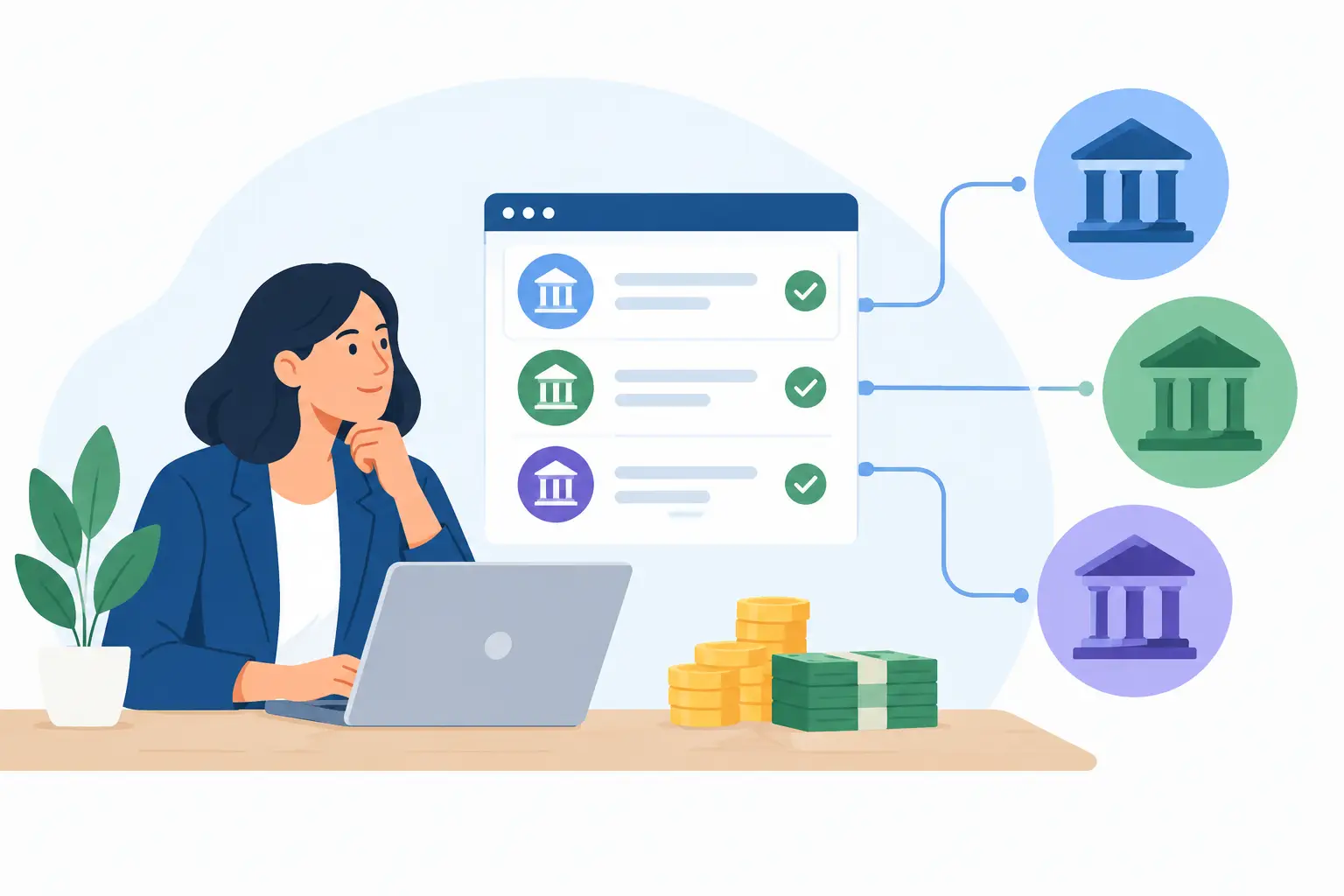
A cash-flow gap rarely arrives at a convenient time. Stock must be paid for, payroll is due, or a confirmed contract needs upfront spend before customer revenue lands. A guide to lender matching platforms can help business owners avoid a slow, fragmented search for finance when timing matters.
Rather than approaching banks and alternative lenders one at a time, a lender matching platform collects key business and funding details, then identifies loan options that may fit. The value is not simply seeing more choices. It is being able to compare the choices that matter - likely loan size, pricing, tenure, repayment structure and expected approval speed - before investing time in a full application.
For SMEs in Singapore, where lenders can have very different credit criteria and documentation requirements, that clarity can materially improve the funding process.
What a lender matching platform does
A lender matching platform sits between a business seeking finance and a network of lenders. It is not usually the lender providing the capital. Its role is to simplify discovery, collect an initial set of information and direct the borrower towards suitable funding providers or products.
The process typically starts with a short enquiry covering the funding amount, intended use, trading history, revenue, existing borrowing and company details. The platform uses this information to narrow the lender pool. Depending on the platform and the business profile, the result may be a selection of indicative options, an introduction to relevant lenders, or support through the next stage of an application.
This approach is particularly useful when the right facility is unclear. A business seeking S$200,000 for seasonal inventory may need a term loan with predictable repayments. Another company with delayed invoices may be better served by a working-capital facility with more flexible access to funds. A matching platform helps frame the requirement before the borrower commits to one lender’s product.
Why lender matching platforms save time
The traditional route often means repeating the same explanation across several lenders: what the business does, how much it needs, why it needs the money and how it will repay it. Each lender may use different forms, eligibility rules and terminology. That creates friction at exactly the point when an owner needs to focus on operations.
A comparison-led platform reduces duplication by creating a clearer starting profile. It also makes differences between offers easier to spot. A lower advertised rate may not be the best commercial option if approval takes too long, the repayment schedule strains monthly cash flow, or the lender requires security the company does not wish to provide.
Speed should still be viewed carefully. A fast initial response is useful, but it is not the same as a final approved facility. Approval can depend on financial statements, bank transaction records, director information, existing liabilities and the lender’s final checks. The practical advantage is that matching can help a business spend its effort on lenders that are more likely to be relevant.
How to compare loan options properly
A credible comparison should go beyond the headline interest rate. Business borrowing is a commercial decision, and the best option depends on the total cost, the repayment pressure and how well the facility fits the purpose of the funding.
When reviewing matched offers, assess these areas together:
- Total borrowing cost: Look at the interest rate alongside any processing, administrative, early repayment or late-payment fees. Ask for clarity on how interest is calculated and whether the stated rate is fixed or variable.
- Loan amount and tenure: A longer tenure can reduce the monthly repayment but may increase total interest paid. A shorter tenure costs less overall in some cases, yet it can put unnecessary pressure on operating cash flow.
- Repayment structure: Check whether repayments are monthly, weekly or tied to a revolving facility. The structure should match the rhythm of the business’s income, not just the requested amount.
- Security and personal commitments: Some facilities may require collateral, a personal guarantee or other forms of support. Understand the obligation before proceeding.
- Approval and drawdown timing: If a supplier payment has a firm deadline, ask what documents are needed and when funds could realistically be available after approval.
Comparing these points side by side turns a loan search into a more disciplined decision. It also makes it easier to explain the choice to a finance manager, co-founder or board member.
Do not borrow based on the maximum available amount
A lender may be willing to offer more than the business needs. That does not make the larger facility the better choice. Borrowing should be linked to a specific business purpose and a credible repayment plan.
For example, expansion finance may be justified when a new outlet, team or equipment purchase has forecast revenue behind it. Working capital for a temporary cash gap can make sense when outstanding receivables are reliable. Borrowing to cover a recurring operating shortfall requires more caution, because the underlying issue may be margin, collections or cost control rather than access to credit.
What information to prepare before matching
Better information generally leads to more useful matches. Before using a platform, prepare a concise view of the company’s trading position and funding requirement. You do not need to produce a lengthy business plan for every enquiry, but you should be ready to explain the purpose of the loan in straightforward terms.
Useful documents often include recent management accounts, bank statements, annual financial statements, company registration details and a schedule of current debts. A company with uneven revenue should be prepared to explain the pattern. Seasonal trading is not necessarily a problem, but lenders need context.
Be accurate about existing facilities, including credit lines, equipment finance and director loans. Omitting them can delay an application later. It is also sensible to calculate an affordable repayment range before comparing options. The question is not only, “Can the business obtain this loan?” It is, “Can it repay this loan comfortably while continuing to operate?”
Questions to ask a lender matching platform
Transparency is central to a useful matching experience. Before sharing information, understand how the platform works and what happens after you submit an enquiry.
Ask whether it works with multiple lenders, whether all potential matches are shown or only selected partners, and whether the platform receives a fee from lenders. A platform can be paid through lender partnerships and still provide real value, but the commercial model should be clear.
You should also ask whether an enquiry affects your credit profile, when a formal credit check may take place and how your business data will be used. There is a meaningful difference between an initial eligibility assessment and a full credit application. Knowing that difference helps you control the process and avoid surprises.
Finally, check how much support is available when comparing offers. Some businesses only need a fast view of available options. Others benefit from a conversation about facility type, repayment terms or documentation. The right level of support depends on the complexity of the request.
Where matching platforms have limits
A matching platform is a decision-support tool, not a guarantee of funding. Lenders still make their own decisions, and a business that appears suitable at the enquiry stage may not meet final underwriting requirements. Financial performance, sector risk, credit history, time in business and supporting documents can all affect the outcome.
Platforms also vary in lender coverage. No single service necessarily represents every financing provider in the market. If the business has a specialist need, such as trade finance, property-backed borrowing or a highly structured facility, direct discussions with specialist lenders may still be appropriate.
That said, starting with a trusted platform can give owners a stronger sense of the market before committing to a route. Smart-Lend is designed around this comparison-led approach, helping businesses assess loan options with clearer visibility over rates, terms and potential approval pathways.
Use comparison to make a better funding decision
The strongest use of a lender matching platform is not to chase the first available offer. It is to create a shortlist that supports a clear commercial choice. Define the funding purpose, prepare accurate information, compare the full cost and repayment commitment, then ask direct questions before accepting any facility.
When finance is needed quickly, clarity is often more valuable than a long list of lenders. A well-matched option should support the next stage of the business without creating a repayment burden that limits the one after it.