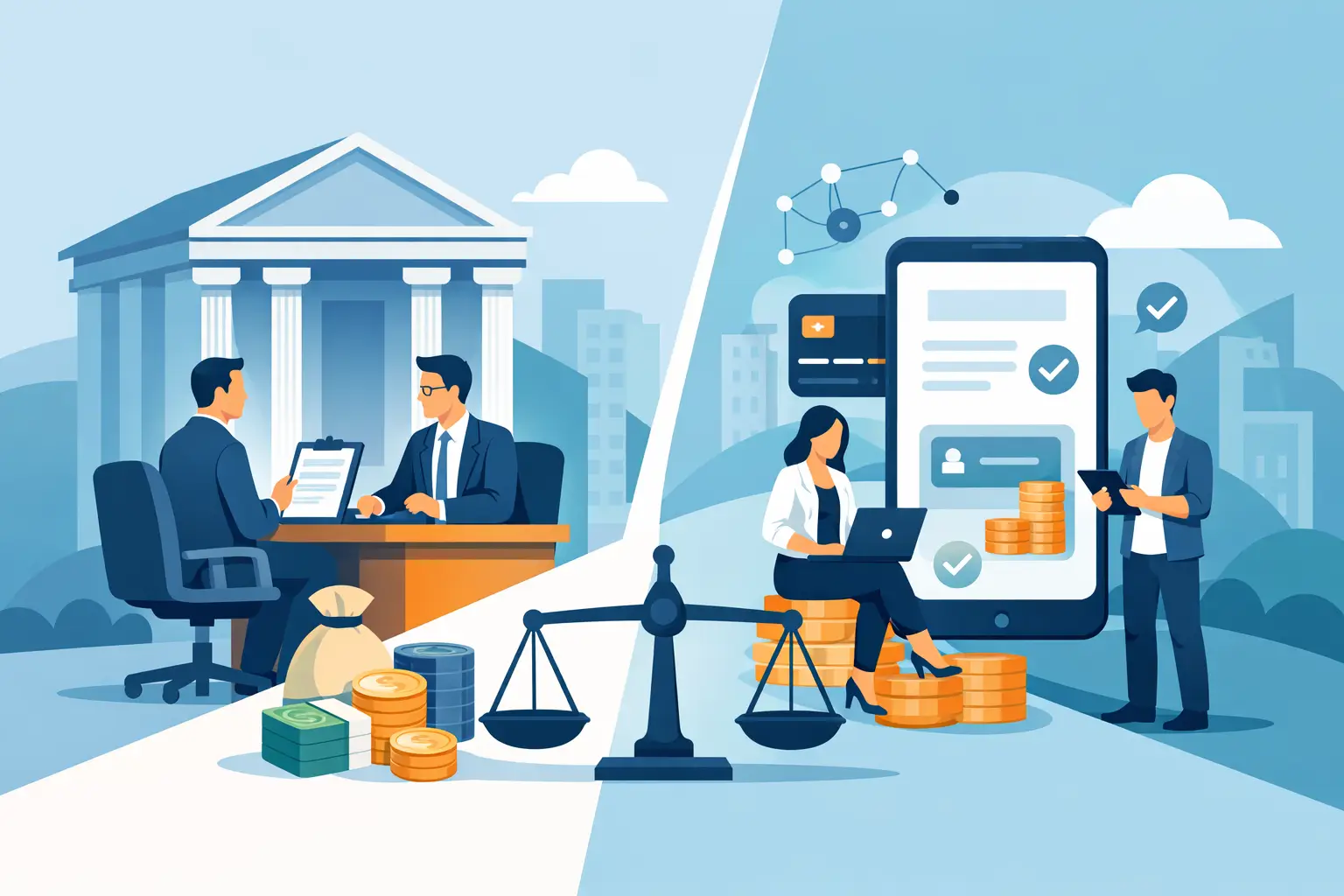
A large customer invoice due in 45 days can look healthy on paper and still leave your business short of cash for payroll, stock or a supplier deposit this week. That is where the bank loan vs fintech loan decision becomes practical rather than theoretical. The right choice depends on how quickly you need funds, what your accounts show, how predictable your cash flow is and the total cost you can comfortably carry.
For Singapore SMEs, a bank is no longer the only route to business finance. Fintech lenders and financing platforms can offer a faster, more digital path to working capital. Yet speed alone should not decide the outcome. A loan that arrives quickly but puts pressure on your monthly cash flow may cost more than the problem it solves.
Bank loan vs fintech loan: the core difference
A bank loan is usually provided by an established bank using a structured credit assessment. The lender will commonly review your company’s financial statements, bank records, business history, existing liabilities and sometimes collateral or personal guarantees. This can result in competitive pricing and longer repayment periods for businesses with strong financials.
A fintech loan is arranged or provided through a technology-led lender or financing provider. Applications are generally completed online, with digital document submission and automated checks helping to shorten the process. Some fintech providers assess alternative data alongside standard financial information, which may help businesses that do not fit a conventional bank credit profile.
Neither option is automatically better. A profitable, established company planning a renovation or equipment purchase may value a bank loan’s potentially lower cost and longer tenure. A growing distributor facing a time-sensitive inventory opportunity may place greater value on a fintech lender’s speed and flexible underwriting.
Where bank loans tend to work best
Bank loans often suit businesses with at least a stable operating track record, orderly accounts and a clear ability to service monthly repayments. They can be appropriate for larger funding needs, longer-term investments and businesses prepared for a more detailed application process.
The trade-off is time and certainty. Bank credit checks can be thorough, and approval is not guaranteed simply because your business has traded for several years. If urgent cash flow is the issue, a process that takes longer than your payment deadline may not be commercially useful.
Where fintech loans tend to work best
Fintech financing can suit businesses that need a quicker decision, want a paper-light application journey or have funding requirements that do not align neatly with a traditional bank product. Short-term working capital, inventory purchases and bridging a gap between supplier payments and customer receipts are common use cases.
The trade-off may be a higher overall financing cost, shorter repayment terms or more frequent repayment schedules. These features can be manageable when funding supports a specific, profitable cycle. They require more care when cash flow is already inconsistent.
Compare the real cost, not just the advertised rate
The lowest headline interest rate is not always the lowest-cost loan. Two offers can use different pricing methods, repayment structures and fee arrangements, making a simple rate comparison misleading.
Ask each lender for the total amount repayable across the full loan term. Then check whether there are processing fees, annual fees, early settlement charges, late-payment fees or charges linked to a personal guarantee. If repayments are daily or weekly, model them against your actual collection cycle rather than your average monthly revenue.
A useful test is simple: can the business repay the loan from normal operating cash flow without relying on another loan, delayed supplier payments or a best-case sales forecast? If the answer is only yes in a perfect month, the facility may be too tight.
For example, a shorter fintech loan may have a higher monthly cost but still make commercial sense if it lets you secure stock that turns quickly at a reliable margin. Conversely, financing a long-lived asset with a short-term facility can create unnecessary pressure. The repayment term should broadly match the period in which the investment produces cash.
Speed matters when the timing has value
Fast approval is valuable when a delay has a measurable cost. You may lose a supplier discount, miss a confirmed contract or be unable to replenish a fast-selling product line. In those cases, fintech funding can be a sensible option if the expected return comfortably exceeds the financing cost.
However, speed should not mean skipping due diligence. Before accepting an offer, confirm the lender’s identity, read the facility agreement and understand what happens if a repayment is late. Check whether the lender takes a charge over company assets, requires a director’s personal guarantee or has the right to collect repayments directly from your bank account.
A bank may be slower, but the extra time can be worthwhile when you are seeking a sizeable loan for expansion and have the financial records to support a stronger application. The best route is the one that meets your deadline without compromising affordability.
Eligibility, documents and approval certainty
Banks typically place greater weight on conventional credit indicators: revenue consistency, profitability, debt levels, repayment history and available security. Start-ups and newer SMEs may find these requirements harder to meet, particularly if they have limited financial history or uneven trading results.
Fintech lenders may take a broader view, but that does not mean they lend without scrutiny. They can still request bank statements, accounting records, identification documents, invoices, tax information and details of existing borrowing. Digital applications can reduce administrative friction, not remove the need to demonstrate repayment capacity.
Prepare your documents before you apply. Clean, current management accounts and a straightforward explanation for the loan purpose strengthen any application. Be transparent about existing liabilities. A lender is more likely to trust a business that explains a temporary cash-flow gap clearly than one that leaves unexplained commitments in the numbers.
It is also worth avoiding multiple rushed applications without a plan. Repeated enquiries may complicate your borrowing profile, while inconsistent information across applications can slow down reviews. Compare likely options first, then apply to lenders that suit your business stage and funding objective.
Questions to ask before choosing a business loan
Use the same questions for every offer so you can compare like with like:
- What is the total amount repayable, including every fee and charge?
- How often are repayments collected, and do those dates match our cash receipts?
- Is the rate fixed or variable, and what could cause the cost to change?
- What security, company charge or personal guarantee is required?
- Can we repay early, and what will that cost?
- What happens if revenue falls or a customer pays late?
The answers reveal more than a headline approval message. They show whether the facility gives your business useful breathing room or simply shifts the pressure into the next repayment date.
Choosing the right route for your business
Choose a bank loan when you have time, established financials and a funding need that benefits from potentially lower pricing or a longer tenure. Consider a fintech loan when timing is critical, your business needs a more flexible digital process or the funding will support a defined short-term commercial opportunity.
There is also a third option: compare both before deciding. Lenders assess the same business differently, and the strongest offer is not always from the first provider you approach. Reviewing rates, loan terms, approval timelines and repayment structures side by side gives you a clearer basis for action.
Smart-Lend helps business owners compare loan options from multiple lending partners in one place, reducing the time spent approaching lenders individually. Start with the amount you genuinely need, the repayment your cash flow can support and the date funding must be available. Those three figures will point you towards finance that supports growth rather than creating a new constraint.