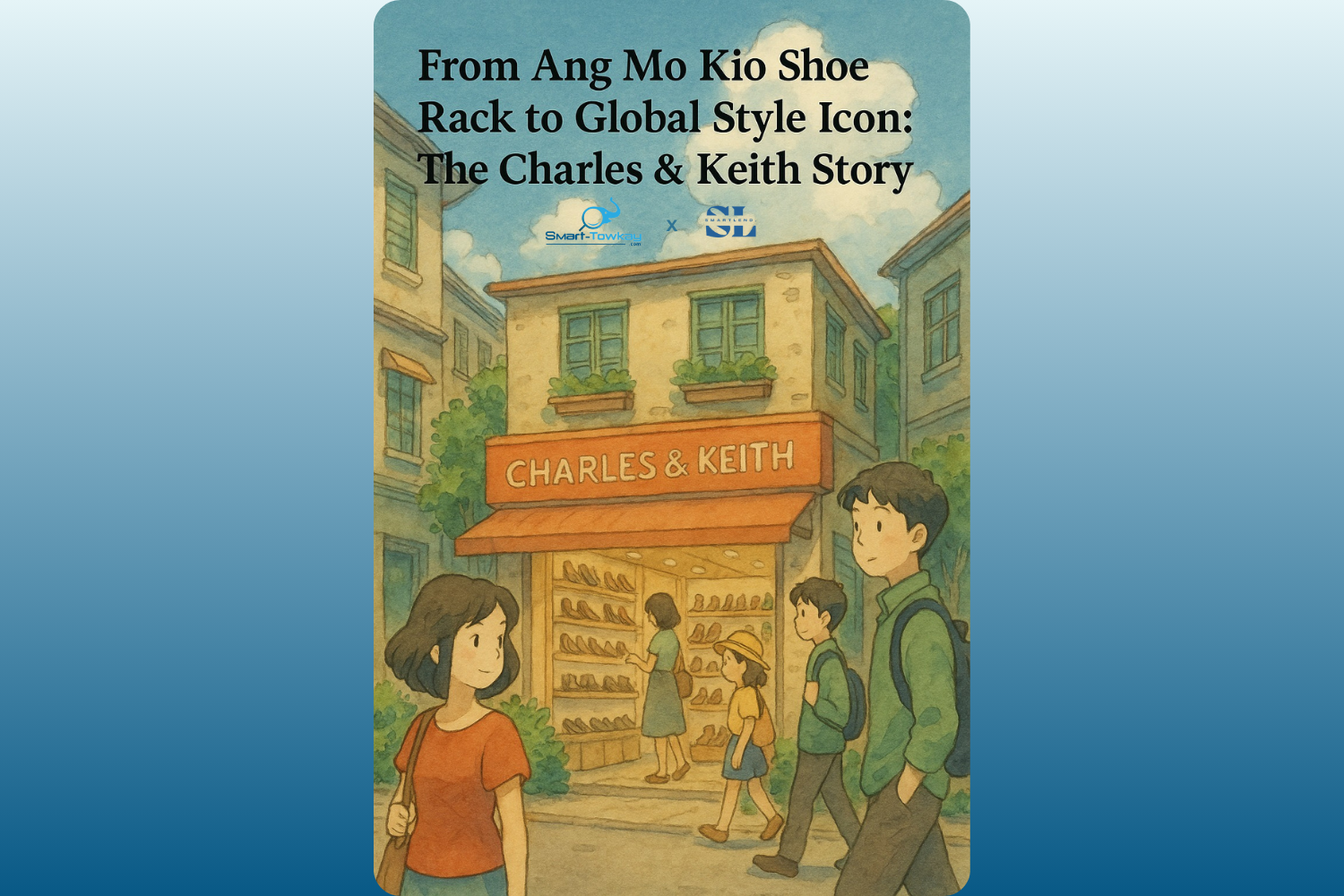
A story of bold moves, smart positioning, and an unwavering focus on brand identity
By SmartLend Editorial | 2025 Fifth Edition
Humble Roots & Big Dreams (1990s)
In the bustling heartlands of Ang Mo Kio in the 1990s, two brothers were quietly absorbing lessons that would one day reshape Asian fashion. Charles and Keith Wong grew up stacking shoeboxes and serving customers in their parents’ discount shoe shop. Business was modest, margins razor-thin, but the experience planted two convictions: customers wanted style, and wholesale chains were holding local retailers back.
So in 1996, armed with little more than grit and ambition, the brothers opened their own store at Amara Shopping Centre. It was called CHARLES & KEITH. Unlike the wholesale shoes their parents sold, these were original designs—crafted for women who wanted something fresh. The gamble worked. Shoppers embraced the brand, and soon, stores sprouted across Singapore.
✈️ First Steps Abroad
Opportunity knocked earlier than expected. In 1998, while Asia was still reeling from a financial crisis, the brothers opened their first overseas store in Jakarta’s Taman Anggrek Mall. Most retailers were tightening belts. Charles & Keith did the opposite. Their logic: crises create bargains. Rents were low, good retail staff were available, and international expansion would give them a head start.
It was a daring move—and it worked. That small Jakarta store became the seed for what is now a network in 37 countries.
💻 Betting on Digital Before Anyone Else
By 2004, the internet was still dial-up for many Singaporeans, but the brothers saw its potential. While most brands were focused on brick-and-mortar expansion, Charles & Keith launched an e-commerce website—the first Singapore fashion brand to do so.
The timing was uncanny. When SARS hit in 2003, shopping malls emptied, but their online store kept sales flowing. That early digital presence gave them an omnichannel advantage years ahead of competitors.
Diversifying & Scaling Up (2006–2011)
- 2006: The group launched PEDRO, a premium men’s footwear brand.
- 2007: PEDRO opened its first overseas store in the Philippines.
- 2011: French luxury investor L Capital Asia (LVMH) acquired a stake in Charles & Keith, while the brand set up regional headquarters and opened its first store in Shanghai. This investment elevated global recognition and funded expansion. The investment provided both credibility and cash, fueling new headquarters, a flagship in Shanghai, and a broader global footprint. Importantly, the Wongs structured the deal so that they could buy back control later, a move that preserved long-term independence while leveraging short-term capital.
Crisis as Opportunity (2008–2010s)
During the Asian financial crisis and later the Iraq War, the Wongs secured prime spaces in Singapore and the Middle East at reduced rents. They believed downturns offered rare bargains.
In the wake of the 2008 global financial crisis, they chose to expand into China rather than Europe or the U.S.; today China contributes more than half of the group’s sales.
The brand also listened to local markets: while opening in Dubai, customers asked for handbags with accessories, prompting the company to expand its product mix — handbags now account for nearly half its business.
Reinvention & Sustainability (2017–2024)
- 2017: Charles & Keith celebrated 21 years with a new duplex store at Changi Airport, launched a children’s line and revamped their Japanese operations.
- 2019: They established a sustainability department and began exploring eco-friendly materials and ethical supply chains.
- 2021: For their 25th anniversary, the brand released a collection made from recycled materials and unveiled a sixth-generation store concept.
- 2022–2023: Charles & Keith entered the metaverse and accepted cryptocurrency payments, opened their first store in Mexico City and launched global ambassador campaigns.
- 2024: A new brand graphic identity and three flagship boutiques in Tokyo, Chengdu and Singapore underscored their global ambition. The Jewel Changi Airport store merges lush greenery, LED panels and Singapore heritage, offering an immersive experience.
Smart Fintech Moves
To power global e-commerce, Charles & Keith partnered with payments firm Nuvei in 2024, enabling digital wallets like Apple Pay and Google Pay across Asia, Europe and the U.S. The collaboration increased card authorization rates and drove double-digit growth in online revenue.
📅 Milestones at a Glance
Year 1996
Milestone: First store & own designs
Note: Differentiated from wholesale model
Year 1998
Milestone: First overseas store (Jakarta)
Note: Start of international growth
Year 2004
Milestone: Launched e-commerce
Note: Pioneered online fashion retail in SG
Year 2005
Milestone: Added handbag line
Note: Expanded beyond shoes
Year 2006
Milestone: Launched Pedro (men’s)
Note: Diversification
Year 2011
Milestone: LVMH investment; HQ & Shanghai store
Note: Fueled global expansion
Year 2024
Milestone: New flagship stores in Tokyo, Chengdu, Singapore
Note: Brand reinvention
💡 Lessons for SMEs
- Differentiate early: Designing unique products allowed Charles & Keith to escape commodity margins.
- View crises as opportunities: The Wongs used downturns to secure prime locations and expand into new markets.
- Adopt tech ahead of the curve: Early e-commerce (2004) and later partnerships for digital wallets kept the brand relevant across channels.
- Listen to local demand: Launching handbags in response to Middle Eastern customers helped the brand evolve into a lifestyle label.
- Stay agile with capital: Temporary partnership with LVMH gave prestige without sacrificing long-term control — the Wongs later bought back the stake.
In sum, Charles & Keith’s journey is about bold bets, relentless innovation and listening to customers. They prove that a local SME can become a global brand by taking calculated risks, embracing technology and staying true to a clear vision.
Pivotal Stories That Illustrate Their Risk-Taking Ethos
🎯 Betting Big on a Prime Store
Shortly after launching their namesake label in 1996, Charles and Keith were offered a coveted retail unit at Causeway Point, one of the busiest malls in northern Singapore. The rent was far higher than what their young business could comfortably afford. According to Charles, their father urged them to “just take the shop” despite the price. The gamble paid off: sales at the new store exceeded expectations, proving that investing in prime locations could accelerate growth.
✈️ Expanding Overseas During a Crisis
Only two years after opening their first store, the brothers expanded to Jakarta in 1998. This move came amid economic turbulence in Asia, yet they believed early regional expansion would give them a foothold ahead of competitors. That belief was tested again during the Iraq War. As bombs fell in Baghdad, most retailers stayed away from the Middle East—but Charles & Keith opened stores in Dubai, Bahrain and Oman. The rationale was simple: rents were low and talented retail staff were suddenly available. By seizing the moment, they built a profitable Middle-Eastern network long before global rivals entered.
💻 Being First in E-commerce
In 2004, when online shopping was still nascent in Singapore, Charles & Keith launched an e-commerce site. This digital gamble let them reach customers beyond physical stores years ahead of local competitors. During the 2003 SARS outbreak, the site kept sales flowing while foot traffic plummeted. That early head-start laid the foundation for today’s omnichannel presence.
👜 Turning Customer Feedback Into New Business
While opening boutiques in the Middle East, the brothers noticed that customers often paired their shoes with luxury handbags. Realising they were missing a revenue opportunity, they took another risk: investing in handbag design and production. The handbag line debuted in 2005 and soon became a runaway success; today bags account for nearly half of sales.
Doubling Down on China
After the 2008 global financial crisis, many retailers pulled back on expansion. Charles & Keith did the opposite: they targeted China as their next growth engine. Charles said he felt China’s recovery would outpace the U.S. or Europe, so they poured resources into opening stores across Shanghai and other cities. That decision proved prescient—China now contributes more than half of the company’s revenue.
🧠 Lessons for SMEs
These stories show that Charles & Keith’s rise wasn’t the result of conservative, incremental steps. It stemmed from calculated risk-taking: committing to premium retail spaces before the numbers justified it; entering volatile markets when others fled; investing early in e-commerce; and expanding product lines in response to customer feedback. Each bold bet came with financial risk, but the brothers mitigated it by knowing their customers intimately, maintaining lean operations and seizing crises as opportunities.
For SMEs looking to follow their path, the takeaway is not to be reckless, but to recognise when a market shock or new technology can tilt the playing field in your favour. With the right insights and a willingness to act decisively, bold moves can become turning points.
📊 SmartLend Approval Stats (Weekly Update)
🚀 Week 5 Highlights
🔓 Launched five weeks ago:
💼 SMEs Funded: 4
👤 Individual Funded: 0
💰 Total Disbursed: $320,680
⏱ Fastest Approval: 1 Day
📈 Top Loan Type: Private Credit
🏪 Top Industry: Manufacturing
📢 Public Service Announcement
We have observed a rising trend of fraudulent bank statements originating from a local bank. These documents are often authentic statements that have been illegally edited to replace the original account holder’s name with the borrower’s name.
🔎 Lenders are advised to exercise caution and conduct additional checks when reviewing bank statements to safeguard against such fraudulent activities.
💡 SMART Tips
P2P Loan vs. Private Credit — What’s the Difference?
P2P Loan (Peer-to-Peer)
✔ Funded by many individual or retail investors through a digital platform
✔ Usually smaller loan sizes & shorter tenor (e.g., 3–12 months)
✔ Faster approval, often unsecured, but interest rates can be higher
Private Credit
✔ Funded by institutional investors, funds, or family offices
✔ Larger ticket sizes, often structured loans or secured financing
✔ More flexible terms, but requires stronger financials and due diligence
This post was adapted from our weekly SmartLend newsletter. If you’d like the latest tips, case studies, and SME financing insights delivered straight to your mailbox—join our newsletter here.